

 See My Latest Article on HelloNation

A heat pump is an electric heating and cooling system that moves heat rather than creating it through combustion. During warm weather, it removes heat from indoor air and releases it outside. During cooler weather, it reverses direction and brings available heat indoors.
For households in Madison, AL, this dual-purpose operation can be useful because the area experiences long cooling seasons, winter freezes, and changing outdoor temperatures. Understanding how a heat pump works helps explain its comfort, energy use, maintenance needs, and normal operating sounds.
What does a heat pump do?
A heat pump transfers heat between the inside and outside of a building. It can provide both air conditioning and heating because the direction of heat movement changes.
In cooling mode, the system:
- Absorbs indoor heat through an indoor coil
- Moves that heat through refrigerant
- Releases the heat outdoors
- Sends cooler air back through the ductwork
In heating mode, the process reverses:
- The outdoor coil absorbs heat from outdoor air
- Refrigerant carries that heat indoors
- The indoor coil releases the heat into the home
- The blower circulates warmed air through the rooms
Even cold outdoor air contains some heat energy. A heat pump extracts that energy and concentrates it indoors. However, the colder the weather becomes, the harder the system must work to collect enough heat.
How does a heat pump heat a home?
A heat pump uses a refrigeration cycle similar to the one found in an air conditioner or refrigerator. The main difference is that a heat pump can reverse the cycle.
The system contains several major components:
- Compressor: Raises the pressure and temperature of the refrigerant.
- Indoor and outdoor coils: Transfer heat between the refrigerant and surrounding air.
- Reversing valve: Changes the direction of refrigerant flow.
- Expansion device: Lowers refrigerant pressure so it can absorb heat.
- Blower and ductwork: Move conditioned air throughout the home.
- Thermostat and controls: Tell the system when to heat, cool, or use supplemental heat.
When heating, the outdoor coil becomes the heat-absorbing coil, even though it may feel cold to the touch. The refrigerant inside it is colder than the surrounding outdoor air, allowing heat to move into the refrigerant. The compressor then raises the refrigerant’s temperature before the indoor coil releases the heat inside.
This is why heat pump air may feel less intensely hot than air from a gas furnace. The system is transferring heat steadily rather than producing a high-temperature flame.
Does a heat pump also provide air conditioning?
Yes. Most heat pumps provide air conditioning as well as heating. In cooling mode, the reversing valve changes the refrigerant path so that the indoor coil absorbs heat from the home and the outdoor coil releases it.
The cooling process also removes moisture from indoor air as warm, humid air passes over the indoor coil. This matters in Madison, AL, where summer humidity can make indoor spaces feel warmer than the thermostat reading suggests.
A heat pump that is operating normally should maintain comfortable indoor temperatures in both seasons. A system may run longer during especially hot or cold weather, but longer operation is not automatically a problem. Heat pumps are often designed to operate in extended cycles instead of turning on and off frequently.
What happens during a defrost cycle?
During cold, damp weather, frost can form on the outdoor coil. A layer of ice blocks airflow and reduces the system’s ability to absorb heat.
To remove that ice, the heat pump briefly switches into cooling mode while an outdoor fan may stop running. Heat from the refrigerant melts frost from the coil. The indoor system may temporarily use supplemental heat so that cool air is not blown into the living space.
A defrost cycle commonly lasts several minutes. Steam or water around the outdoor unit can be normal as melted frost drains away. Frequent heavy icing, ice that never clears, or a system that remains unable to heat the home may indicate an airflow, drainage, refrigerant, control, or outdoor coil problem.
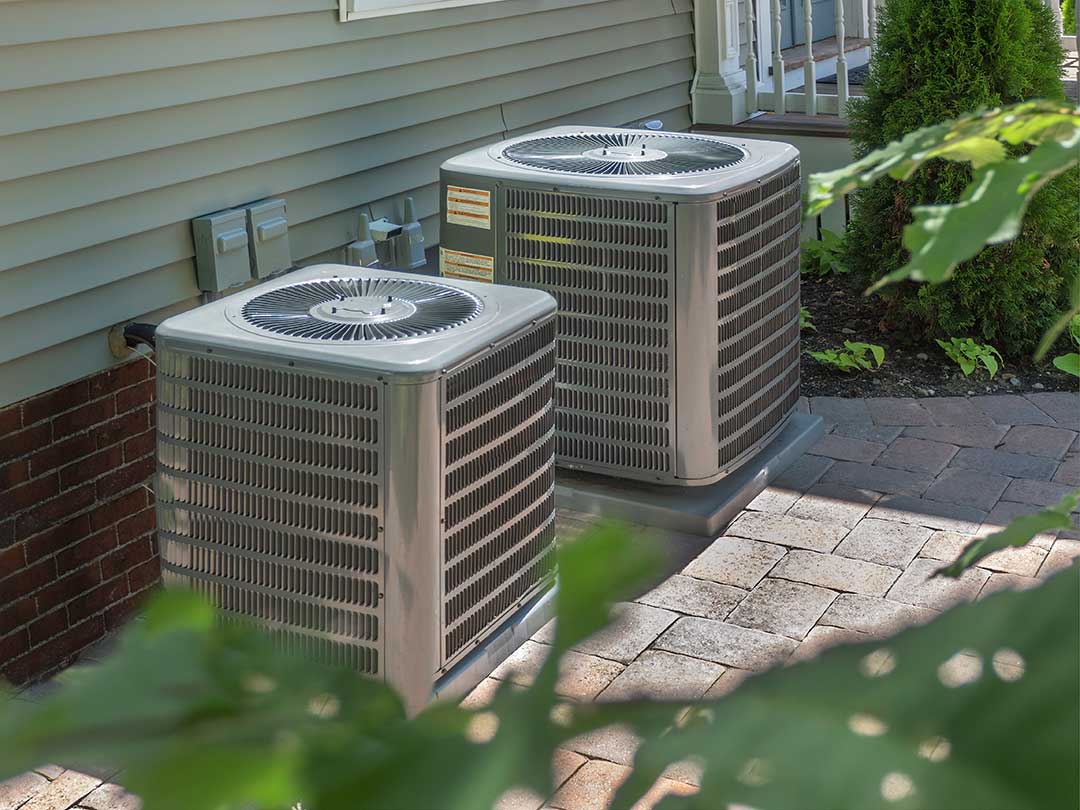
The outdoor unit should remain clear of leaves, grass, stored objects, and other obstructions. Blocking airflow makes both heating and cooling less effective.
What is supplemental or auxiliary heat?
Many heat pumps include supplemental heat for periods when the system cannot keep up with the heating demand by itself. This is often called auxiliary heat or backup heat.
Supplemental heat may come from electric resistance heating elements, a separate furnace, or another approved heating source. Electric resistance heat works like a large toaster: electricity passes through heating elements, which become hot and warm the air.
Auxiliary heat usually costs more to operate than the heat pump’s normal heating cycle. It may turn on during very cold weather, after a large thermostat increase, or during a defrost cycle. A brief appearance of “AUX” or “Emergency Heat” on a thermostat is not necessarily a malfunction.
Emergency heat is different from ordinary auxiliary heat. It manually locks out the heat pump and relies on the backup heat source. It is generally intended for a heat pump that cannot operate, not for routine use.
Are heat pumps practical for local winters?
Heat pumps can operate effectively during typical winter conditions, but performance depends on outdoor temperature, equipment design, insulation, ductwork, thermostat settings, and the home’s heating load.
Winter weather in Madison, AL can shift between mild afternoons, freezing nights, rain, and occasional icy conditions. A properly sized system may handle much of the heating season efficiently, while supplemental heat may assist during colder periods.
Older homes with air leakage, limited insulation, poorly sealed ducts, or drafty windows may feel uncomfortable even when the heat pump is operating correctly. In those cases, the issue may be the building envelope rather than the heating equipment alone.
Heat pumps also deliver warm air gradually. Raising the thermostat several degrees at once can trigger auxiliary heat on some systems. A smaller temperature adjustment may allow the heat pump to continue operating without immediately calling for backup heat.
How efficient is a heat pump?
A heat pump can deliver more heat energy than the electrical energy it consumes because it moves existing heat instead of generating all heat directly. Efficiency varies according to outdoor temperature, equipment condition, airflow, thermostat settings, and the system’s rated performance.
Common efficiency measurements include:
- SEER or SEER2: Cooling efficiency over a seasonal period
- HSPF or HSPF2: Heating efficiency for heat pump operation
- COP: The ratio of heat delivered to electrical energy used at a specific condition
Actual household energy use may differ from laboratory ratings. A system with excellent ratings can still perform poorly if filters are clogged, ducts leak into unconditioned areas, coils are dirty, or the unit is too large or too small for the home.
What maintenance does a heat pump need?
Because a heat pump operates in both heating and cooling modes, it works throughout much of the year. Basic care includes:
- Replacing or cleaning the air filter according to its condition and filter instructions
- Keeping supply registers and return grilles unobstructed
- Removing leaves and debris from around the outdoor unit
- Checking that condensate drainage is not blocked
- Avoiding frequent, large thermostat changes
- Watching for unusual noises, persistent ice, weak airflow, or short cycling
Electrical components, refrigerant circuits, and sealed system repairs require specialized knowledge and can present shock, pressure, or refrigerant hazards. Safety-related repairs and refrigerant work should be handled by qualified personnel in accordance with applicable requirements.
What are common heat pump misconceptions?
A heat pump is not limited to mild climates, and it does not produce cold air during every heating cycle. Air from the vents may feel less hot than furnace air because the system is delivering moderate heat continuously.
Another misconception is that frost on the outdoor unit always means the system has failed. Light frost followed by a normal defrost cycle can be expected. Ice that remains for long periods is different and deserves attention.
Finally, a heat pump is not automatically more efficient in every home. Performance depends on the equipment, installation, ductwork, insulation, thermostat control, and maintenance. Understanding the whole system gives residents a more accurate picture than focusing on the outdoor unit alone.